 By Jabari Zion
Packaging is undergoing its most radical transformation since the advent of modern plastics. For decades, the global supply chain relied on low-cost, durable, single-use materials designed primarily for immediate convenience rather than long-term end-of-life disposal. Today, mounting environmental pressures, shifting consumer expectations, and stringent international regulations are forcing industries to rethink how goods are protected, transported, and delivered.
The future of packaging lies in sustainable innovation, a discipline that merges material science, circular design principles, and digital technology to minimize environmental impact without compromising functionality or economic viability.
The Push Toward Modern Sustainable Packaging Solutions
The transition toward eco-friendly packaging is no longer a peripheral corporate initiative or a simple marketing trend; it has become an operational necessity across global commerce. Several macro forces are accelerating this shift:
-
Regulatory Pressures: Governments worldwide are enforcing strict bans on single-use plastics, implementing extended producer responsibility policies, and mandating minimum recycled content in consumer packaging.
-
Shifting Consumer Choices: Today’s buyers are increasingly informed. They scrutinize corporate environmental practices, prefer minimal packaging, and actively penalize brands that rely on excessive or non-recyclable materials.
-
Corporate Net-Zero Goals: Major enterprises are aligning their supply chains with ambitious ESG metrics. Packaging represents a visible, high-impact area where carbon footprint reductions can be achieved relatively fast.
Core Pillars Driving Breakthrough Packaging Innovations
Sustainable innovation in packaging is not merely about substituting plastic with cardboard. It encompasses a holistic re-engineering of materials, manufacturing processes, and life-cycle systems.
Advanced Bio-Based and Compostable Materials
Engineers and scientists are looking to nature to replace fossil-fuel-based polymers with renewable alternatives. These materials offer similar protective qualities while reducing reliance on petroleum.
-
Mycelium Packaging: Grown from the root structure of mushrooms mixed with agricultural waste, mycelium forms a dense, lightweight material that acts as a direct replacement for expanded polystyrene foam. It breaks down naturally within weeks in home compost systems.
-
Seaweed and Algae Coatings: Algae-based films offer natural moisture and oil resistance without needing harmful synthetic coatings. These biopolymers are fully biodegradable, edible, and ocean-safe.
-
Agricultural Residue Paper: Instead of relying exclusively on virgin wood pulp, paper manufacturers are utilizing leftovers from sugar cane, hemp, bamboo, and wheat harvests, preserving forests and reducing agricultural waste burning.
Circular Systems and Reusable Architecture
True sustainability requires shifting from a linear model of take, make, and dispose to a circular model where materials stay in use indefinitely.
-
Refillable Outer Containers: Premium brands across cosmetics, food, and home cleaning are adopting durable stainless steel, heavy glass, or rigid aluminum vessels designed to be refilled using lightweight, low-impact refill packs.
-
Standardized Returnable Shipping Containers: In e-commerce logistics, reusable mailers and plastic totes designed for hundreds of return trips are replacing single-use cardboard boxes and plastic bubble mailers.
-
Mono-Material Engineering: Traditional flexible pouches often fuse multiple layers of different plastics and aluminum foils, making them impossible to recycle. Modern circular design focuses on mono-material constructions that can be easily processed in standard municipal recycling streams.
Smart and Minimalist Design Paradigms
Design optimization plays a crucial role in eliminating waste at the source. By analyzing structural integrity through digital modeling, manufacturers can remove unnecessary weight and bulk.
-
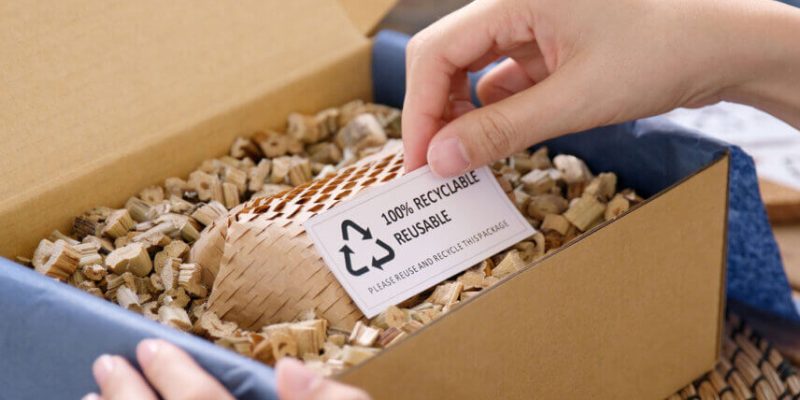
Right-Sizing Initiatives: Customized automated packaging machinery creates boxes tailored to the exact dimensions of individual orders, eliminating wasted internal space and reducing the need for void-fill materials like air pillows or styrofoam peanuts.
-
Waterless Product Formulations: Companies are reimagining the contents inside the package. By selling concentrated tablets or powders instead of water-heavy liquid products, packaging sizes and shipping weights are reduced drastically.
-
Interactive Digital Labeling: Replacing bulky printed manuals and multi-language physical inserts with QR codes and smart digital tags reduces paper usage while providing consumers with dynamic, accessible product details.
Evaluating Sustainable Packaging Alternatives
Choosing the right packaging strategy requires balancing performance, environmental trade-offs, and supply chain logistics:
| Material / Strategy | Primary Environmental Benefit | Key Technical Advantage | Implementation Consideration |
| Mycelium Molded Foam | Fully home-compostable and petroleum-free | High shock absorption and thermal insulation | Higher initial unit cost compared to expanded polystyrene |
| Mono-Material Flexible Films | Highly compatible with standard recycling streams | Excellent barrier protection against oxygen and moisture | Requires precise thermal sealing during production |
| Agricultural Residue Paper | Reduces deforestation and agricultural burning | Strong tensile strength and natural aesthetic | Requires consistent regional sourcing of crop waste |
| Returnable E-Commerce Mailers | Cuts long-term material consumption and solid waste | Durable construction withstands dozens of transit cycles | Depends on consumer participation in return logistics |
Challenges Facing the Widespread Adoption of Eco-Friendly Packaging
While the momentum behind sustainable packaging is undeniable, several practical hurdles slow down global implementation across mass-market supply chains:
-
High Initial Sourcing Costs: Novel biopolymers and specialized compostable films often cost significantly more than legacy petroleum plastics due to limited production scale and smaller manufacturing capacity.
-
Infrastructure Deficits: Many municipalities lack industrial composting facilities or the technical sorting equipment needed to process advanced bioplastics, leading to consumer confusion and contamination in recycling streams.
-
Shelf-Life Restrictions: Food and pharmaceutical applications require stringent barrier properties to prevent contamination and premature spoilage. Finding plant-based coatings that match synthetic plastic shelf performance without compromising compostability remains a complex engineering hurdle.
Frequently Asked Questions
What is the primary difference between biodegradable and compostable packaging?
Biodegradable packaging refers to materials that can break down through natural processes over an unspecified period into organic matter. Compostable packaging is a subset of biodegradable materials that decomposes within a specific timeframe under controlled conditions, leaving no toxic residues or microplastics behind.
Why is traditional flexible plastic packaging so difficult to recycle?
Traditional flexible packaging is constructed using multiple layers of different materials, such as polyethylene, aluminum, and nylon, fused together to create a strong barrier. Sorting facilities cannot easily separate these fused layers, making the resulting material unsuitable for standard mechanical recycling processes.
How does packaging weight impact a company’s carbon footprint?
Lighter packaging reduces the total weight of cargo, which directly decreases fuel consumption and carbon emissions during transportation. Converting from heavy rigid containers to lightweight flexible or engineered paper formats can significantly lower overall scope three shipping emissions.
Can recycled cardboard be reused infinitely for food packaging?
No, paper fibers shorten and weaken each time they are processed through the recycling cycle, limiting their reuse to approximately five to seven times. Additionally, recycled cardboard often requires specialized food-safe barrier coatings to prevent inks and mineral oils from migrating into food products.
How do companies prevent greenwashing when introducing sustainable packaging?
Companies avoid greenwashing by backing environmental claims with third-party certifications, such as Forest Stewardship Council certification for paper or compostability ratings from recognized testing bodies. Providing transparent, verifiable data about life-cycle impacts helps maintain consumer trust.
Are bioplastics derived from food crops like corn sustainable for the environment?
While corn-based bioplastics reduce reliance on fossil fuels, large-scale cultivation of food crops for packaging consumes land, water, and fertilizers. Modern sustainable innovation focuses on second-generation feedstocks, such as non-food agricultural waste, algae, and forestry residue, to minimize land-use conflict.
What role does artificial intelligence play in modern sustainable packaging design?
Artificial intelligence analyzes structural stress patterns to optimize box geometry, reducing material usage while maintaining strength. AI algorithms also assist sorting machinery at recycling plants in accurately identifying, separating, and processing complex packaging materials at high speeds.