 By Jabari Zion
Fitness businesses in Singapore operate under very different conditions compared to those in low-density cities. Space is expensive, consumer expectations are high, and time is the most limited resource of all. Traditional gym models often struggle to balance operational costs with member engagement, leading to overcrowding, churn, and inconsistent usage patterns.
Against this backdrop, indoor cycling singapore has quietly positioned itself as one of the most scalable and sustainable fitness formats in dense urban environments. The success of this model is not accidental. It is rooted in efficiency, predictability, and strong user retention, all critical factors in modern fitness business design.
The Urban Space Challenge Facing Fitness Businesses
Commercial space in Singapore comes at a premium. Fitness operators must maximise value per square metre while still delivering a high-quality experience.
Traditional gyms require large floor areas to accommodate varied equipment, free weights, and movement zones. These spaces often sit underutilised during off-peak hours, reducing revenue efficiency.
Indoor cycling studios, by contrast, are highly space-efficient. Each bike occupies a fixed footprint, allowing precise capacity planning. Every square metre contributes directly to session delivery, making space usage far more predictable and cost-effective.
This efficiency gives indoor cycling a structural advantage in urban real estate markets.
Predictable Capacity Enables Revenue Stability
One of the biggest challenges in fitness operations is forecasting usage.
Open gyms experience fluctuating attendance patterns. Peak hours are overcrowded, while off-peak hours see low engagement. This imbalance strains resources and frustrates members.
Indoor cycling operates on scheduled sessions with defined capacity. Each class has a clear participant limit, allowing operators to forecast attendance accurately.
This predictability supports:
-
Better staffing decisions
-
More accurate revenue projections
-
Reduced equipment wear from unmanaged usage
-
Improved member satisfaction due to controlled class sizes
For business owners, predictability reduces risk.
High Engagement Drives Strong Retention Metrics
Member retention is the backbone of any fitness business.
Indoor cycling naturally supports higher retention because it creates routine. Members book sessions, follow schedules, and build habits around class attendance.
Unlike open gym access, where usage can decline silently, missed classes are noticeable to the member themselves. This self-awareness reinforces commitment without requiring aggressive retention tactics.
Higher engagement leads to:
-
Lower churn rates
-
Increased lifetime value per member
-
More consistent monthly revenue
-
Stronger brand loyalty
From a business perspective, retention reduces marketing spend while stabilising growth.
Operational Simplicity Lowers Management Complexity
Running a traditional gym involves managing diverse equipment, varied training styles, and multiple member expectations simultaneously.
Indoor cycling simplifies operations. Equipment is uniform, maintenance routines are standardised, and session formats are consistent.
This operational clarity reduces:
-
Staff training complexity
-
Equipment downtime
-
Floor supervision requirements
-
Member confusion about usage rules
Simpler operations allow management to focus on experience quality rather than constant troubleshooting.
Time Efficiency Matches Urban Consumer Behaviour
Singapore consumers value efficiency. Fitness options that demand long, unpredictable time commitments struggle to compete.
Indoor cycling classes run on fixed schedules with clear durations. Members know exactly how long each session will take, making it easier to integrate fitness into busy days.
From a business standpoint, time efficiency increases attendance reliability. Members are more likely to show up when sessions respect their schedules.
This reliability improves utilisation rates, especially during early mornings and evenings, which are critical revenue windows.
Group-Based Formats Reduce Staff Dependency
Personal training models depend heavily on one-to-one sessions, limiting scalability and increasing staffing costs.
Indoor cycling leverages one-to-many instruction. A single instructor can guide an entire class while delivering a high-value experience.
This model:
-
Improves revenue per instructor hour
-
Reduces reliance on large staff teams
-
Simplifies scheduling logistics
-
Maintains consistent service quality
The result is a business structure that scales without proportional increases in labour costs.
Experience Design Becomes a Competitive Advantage
In saturated urban markets, experience differentiation matters.
Indoor cycling allows businesses to design immersive experiences using lighting, music, pacing, and instructor presence. This transforms workouts into events rather than tasks.
Experience-driven fitness encourages emotional attachment to the brand. Members do not just attend classes, they identify with them.
This emotional connection increases word-of-mouth referrals and organic growth, reducing dependence on paid advertising.
Why Indoor Cycling Fits Subscription-Based Models Well
Subscription models rely on consistent perceived value.
Indoor cycling delivers this through:
-
Regular schedule updates
-
Structured progression
-
Familiar class formats with variation
-
Clear participation opportunities
Members feel they are actively using what they pay for. This reduces cancellation risk and supports longer subscription cycles.
For businesses, subscriptions provide predictable cash flow, which is essential for long-term planning.
Technology Integration Without Complexity
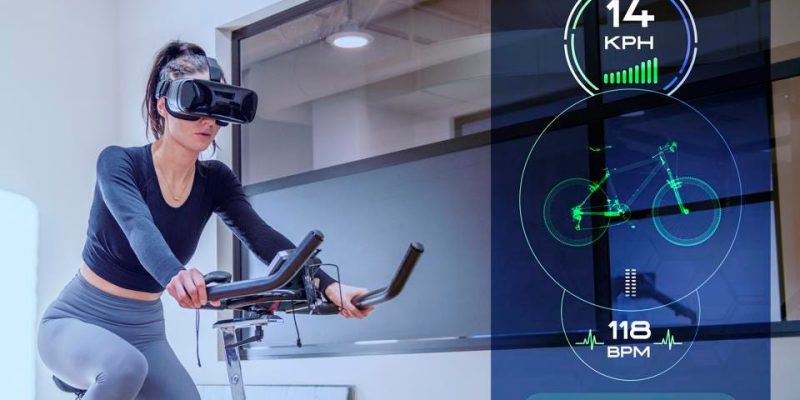
Indoor cycling integrates technology naturally without overwhelming users.
Performance metrics, cadence tracking, and session data can enhance engagement without requiring constant interaction. This keeps the experience intuitive.
From a business perspective, data insights help optimise schedules, instructor performance, and class formats.
Technology becomes a support system rather than a distraction.
How TFX Fitness Aligns With Scalable Urban Fitness Design
Successful indoor cycling programmes require thoughtful execution. TFX Fitness aligns its spin offerings with urban realities by focusing on structure, experience consistency, and member engagement rather than volume-driven overcrowding.
This approach supports sustainable growth while maintaining service quality, a balance many fitness businesses struggle to achieve.
By designing for retention rather than short-term acquisition, the model remains resilient in competitive environments.
The Long-Term Business Advantage of Habit-Based Fitness
Fitness businesses that rely on motivation cycles face constant churn. Those that build habits create stability.
Indoor cycling supports habit formation through routine schedules, familiar environments, and repeated engagement. This behavioural consistency benefits both members and operators.
For businesses, habit-based participation translates into:
-
Stable attendance
-
Lower marketing costs
-
Stronger brand equity
-
Predictable revenue streams
In dense cities like Singapore, stability is a competitive edge.
Why Indoor Cycling Is Not a Passing Trend
Trends fade when novelty wears off. Business models survive when they solve structural problems.
Indoor cycling addresses space efficiency, time constraints, engagement, and retention, all long-term urban challenges. This makes it resilient to changing consumer tastes.
As cities become denser and lifestyles busier, formats that deliver consistent value within tight constraints will continue to grow.
Real-Life FAQs About Indoor Cycling as a Business Model
Q: Is indoor cycling profitable compared to traditional gyms?
A: Indoor cycling can be more predictable and efficient due to fixed capacity, high retention, and lower operational complexity.
Q: Does this model rely too much on instructors?
A: While instructors are important, the one-to-many format reduces dependency compared to personal training models.
Q: Can indoor cycling work in smaller spaces?
A: Yes. Its fixed equipment layout allows effective use of compact studio spaces.
Q: Is member churn lower with indoor cycling?
A: Structured schedules and habit-based participation often result in stronger retention compared to open gym access.
Q: Does indoor cycling limit audience reach?
A: The format appeals to a wide demographic due to adjustable intensity and inclusive design.
Q: Is this model scalable across multiple locations?
A: Standardised equipment, class formats, and operational processes support multi-location scalability.
Indoor cycling is more than a workout trend. In Singapore’s urban environment, it represents a fitness business model built around efficiency, engagement, and sustainability. For operators seeking long-term viability rather than short-lived hype, indoor cycling offers a blueprint that aligns business logic with how people actually live and move in dense cities.